
Make the text size on this site bigger or smaller or reset
Projects of the Florida Developmental Disabilities Council have produced an array of materials on topics ranging from inclusive early education to supported living and employment programs. To meet the needs of diverse audiences, these resources are available in a variety of formats and media, including pamphlets, newsletters, resource guides, handbooks, training manuals, research reports, public education materials, audiotapes, and videotapes. Many are available in Spanish and alternate formats.
A videotape presentation about the Florida Developmental Disabilities Council is also available to anyone interested in learning more about the Council's work.
The following list includes the Council's newest or most requested products. Resources may be downloaded, if available, or ordered on-line.
Los proyectos del Concilio de Invalideces de Desarrollo han producido una serie de materiales de temas como la Educación Temprana Inclusiva, Programas de Apoyo para Vivir Independientemente y los Programas de Empleo. Estos recursos están disponibles en una variedad de formatos y medios de comunicación que incluyen folletos, boletines informativos, guías de recursos, panfletos, manuales de capacitación, materiales educativos, casetes y videos. Muchos de estos materiales están disponibles en español y en varios formatos alternos.
También tenemos a la disposición una presentación de video sobre el Concilio de Invalideces de Desarrollo para aquellos que estén interesados en el trabajo que el Concilio realiza.
La siguiente lista incluye los productos más recientes y más demandados por el público. Algunos de estos productos pueden ser transferidos electrónicamente desde la Internet o pueden ser pedidos directamente a nuestras oficinas.
To request a copy, free of charge, of any of these resources, click "Order Online".
This guide, published by the Mental Health Program Office in the Department of Children and Families, was designed to provide families with information they may find helpful in working with health care providers and others to find appropriate, evidence-based mental health services and supports for their family members.
Early Steps, the system in place to help children with developmental issues and the families that love and provide for them, specifically the Early Steps program, is facing funding shortfalls due, in part, to the economic downturn coupled with identification of a larger number of children in need of services. To proactively address the eminent threat to Early Steps, the Florida Developmental Disabilities Council contracted with the Ounce of Prevention Fund to facilitate a strategic planning process and develop a viable plan for the sustainability of the Early Steps program.
Autism 4 Parents is an organization working to help families living with Autism. Autism 4 Parents has programs to educate and inform parents and the community, including sensory integration directed by an occupational therapist, an Asperger's group directed by a psychiatrist, and Bruster's Buddies 4 Autism. For more information click here.
The Florida Expanding Opportunities for Early Childhood Inclusion Professional Development Workgroup has released “Count Me In: Resources for Early Childhood Inclusion”. The purpose of this compilation is to answer questions and provide general information to families and early learning providers on how to successfully include young children with disabilities in early childhood programs. Click here to view the compilation online. For additional information contact Katy McCullough at katy.mccullough@unc.edu or Lou Ann Long at lalong@centraldirectory.org.
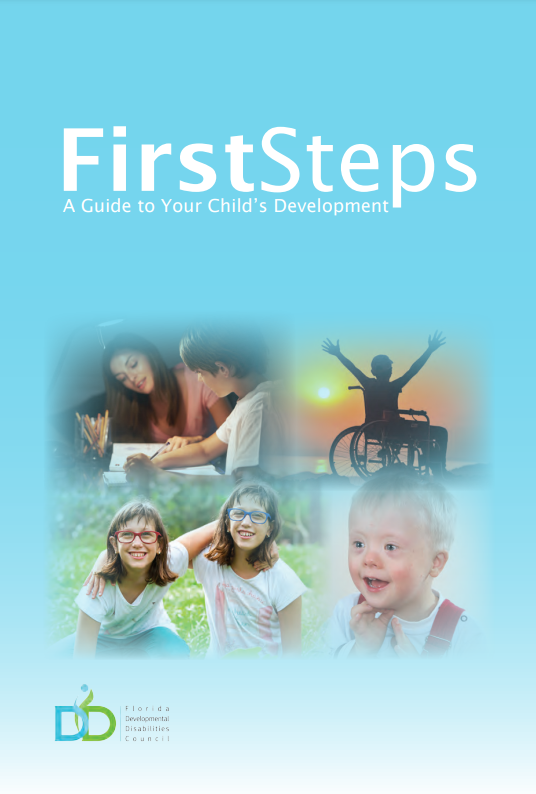
One of the Developmental Disabilities Council's most popular publications, the revised edition of this guide for parents of children with developmental disabilities covers such topics as acceptance, services, and the rights of people with disabilities.
The publication is available both in Spanish and English, as well as in color and black and white (for ease of printing). Both versions of the publication are broken into chapters and the publications are only available in Acrobat Reader (PDF) format. The DOWNLOAD buttons above will take you to the pages where you can download your copies.
Order Online [English]
Order Online [Spanish]
The National Dissemination Center for Children with Disabilities (NICHCY) serves as a central source of information on disabilities in infants, toddlers, children, and youth. Resources include easy-to-read information on IDEA, the law authorizing early intervention services and special education, and State Resource Sheets, which connect families with the disability agencies and organizations in each state. For more information click here.
This website contains information on children with special needs and medical conditions, including a list of disabilities and medical conditions.
A curriculum for assisting people with disabilities who want a home of their own. Designed for use by those who provide services to people with disabilities, particularly in rural areas. A companion workbook for people with disabilities provides lessons and activities to assist in the process of home ownership is also available. (2001)
This publication can help anyone prepare for a disaster, but includes specific information that is important for individuals with disabilities.
This informational guide is useful to anyone with a limited income. It provides practical information on buying or renting a home.(1995)
Information on including individuals with disabilities in education, business and the community.
This publication provides county-by-county transportation information, including specific services available in each county, as well as contact information for the various agencies that manage transportation services in Florida.
People with disabilities are people first. When speaking or writing about individuals with disabilities, it's important to accurately portray them as active, valued members of their communities. We can do this by using People First Language.
Pamphlet answers questions about obtaining safe, decent and affordable housing in a community setting. (2000)
Produced by the Florida Developmental Disabilities Council and the Able Trust, this publication explores innovative approaches for increasing transportation options for Floridians with disabilities. Unfortunately, there are no hard copies of the study report available.
Voting is your right and responsibility as a citizen. If you vote, you can help select the national, state, and local officials who make laws, design programs, and decide how tax dollars are spent. The guide has forms for requesting an absentee ballot and a Florida Voter Registation Application.
In August of 2010 The Florida Developmental Disabilities Council and Disability Rights Florida hosted a series of Special Education Law and Advocacy Workshops throughout the state. The DVDs of the workshops are available to you now at no charge. The three DVDs include Evaluation & IEP; Inclusion & Discipline; and Transition & Problem Solving. To order, click “Order Online”.
There has been an overwhelming number of requests for these DVDs and we only have a limited amount of them. Therefore, we will send one of each of the DVDs requested, and requestors can make as many copies of the DVDs as needed. The DVDs can also be downloaded off the website by clicking on "View Video" below.
Inclusion View Video
Discipline & IDEA View Video
Evaluations View Video
The IEP View Video
Transition View Video
Problem Solving View Video
The State Board of Education Rules are now on the Department of State’s newly created web site. Interested persons may search by rule, title, subject, statute number, and agency, and sign up for e-mail notification when a rule is proposed for amendment. The Web site is: https://www.flrules.org/default.asp.
The Department of Education has developed a new website to ensure that all stakeholders can request a rule development workshop and express their concerns relating to specific rules of the State Board of Education. Rules with final action can also be viewed. For more information go to https://app1.fldoe.org/rules/default.aspx.
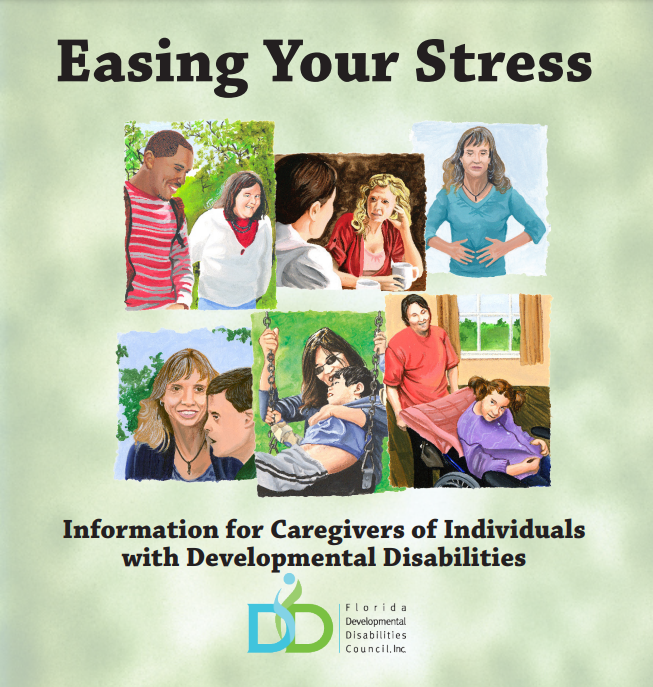
An instructional guide for PARENTS/CAREGIVERS of individuals with developmental disabilities. You can download the English and Spanish PDF versions and order the English version online.
An instructional guide for EDUCATORS of individuals with developmental disabilities. You can download the English and Spanish PDF versions and order the English version online.
Booklet helps parents of students with disabilities understand two important features of special education: accommodations and modifications. (2000)
Report of the Florida Developmental Disabilities Council, Inc. Financing Supported Employment Task Force (March 2004)
This employment resource guide includes up-to-date resource information with hyperlinks from the table of contents to the document to appropriate cites to applicable federal/state law, regulations and websites, making this guide user-friendly and easy to navigate. To review this guide, go to: http://www.faast.org/resources/library
This document provides introductory overview about supported employment services, staff guidelines, rights of individuals. Sections about employment and the ADA, assistive technology, Social Security Work Incentives, the Supported Employment Waiver Program and transition services are also included. (May 2000)
The University of South Florida, in collaboration with the Florida Developmental Disabilities Council, has developed a website to provide information to students with disabilities and their families related to employment and transition. FYI Transition provides information and web-based learning on transition planning, career and post-secondary education planning, job development and support, career exploration, funding, work incentives, and more. For more information, click here.
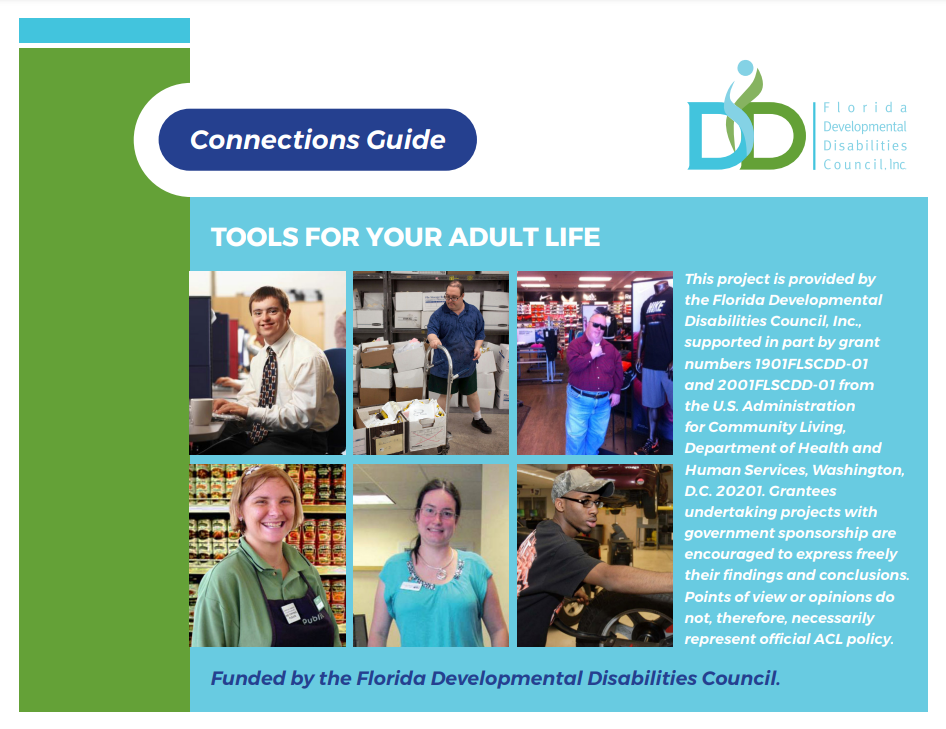
A quick guide for professionals working with individuals with disabilities.
Making the decision to work and developing a plan is one of the most important decisions an individual will make. This guide has information in an easy-to-reasd format for the busy professional.
This guide is designed for potential employers, and it identifies the advantages of hiring people with disabilities. (1998)
Designed for persons requiring special assistance when seeking a job, this guide describes the necessary steps to take to land a job. (1994)
Just The Facts: The 411 on Health Insurance for Young Adults Ages 18-30 in Florida is designed to help all young adults - including those with chronic health conditions or disabilities - identify, access, and maintain health insurance coverage that meets their needs. To view the document or download a PDF version, click here.
In this guide you will find that the purpose of this project was to survey a sample of individuals who are on the Agency for Persons with Disabilities' waiting list, who are living in their own homes or their families' homes, in order to gain a better understanding of their needs. (2008)
Florida Health and Transition Services (FloridaHATS) is a collaborative program of the Florida Department of Health, the Children’s Medical Services Network, the Florida Developmental Disabilities Council, and other partners throughout the state.
FloridaHATS’ mission is to ensure successful transition from pediatric to adult health care for all youth and young adults in Florida, including those with disabilities, chronic health conditions or other special health care needs. For more information click here.
This pamphlet explains how to diagnose retardation and protect the statutory rights of defendants with developmental disabilities. (1997 [rev.])
Universal Education, also referred to as inclusion, is an approach to education that creates learning environments which are inherently designed for diversity, making natural education settings accessible to all children, all together, all the time.
The Council's goals, funding, and strategies for systemic change through the year 2016 are provided in this guide.
State Plan Goals and Objective 2012-2016
State Plan Blueprint 2012-2016
The Florida Alliance for Assistive Services and Technology has produced a comprehensive 96-page publication, “General Resource and Self-Help Guide for Children with Disabilities and their Families”. This guide includes up-to-date resource information with hyperlinks from the table of contents to the document, to appropriate cites, and to applicable federal/state laws, regulations and websites, making this resource guide user-friendly to navigate. To review this guide, go to www.faast.org/atr_trends.cfm.
This document provides accurate and timely information regarding guardianship and alternatives to guardianship for individuals with developmental disabilities and their families. If legal advice or other expert assistance is required, please seek the service of competent professional.
A resource guide for people who receive services through DCF/Developmental Disabilities Program. Large file 6MB. (1999)
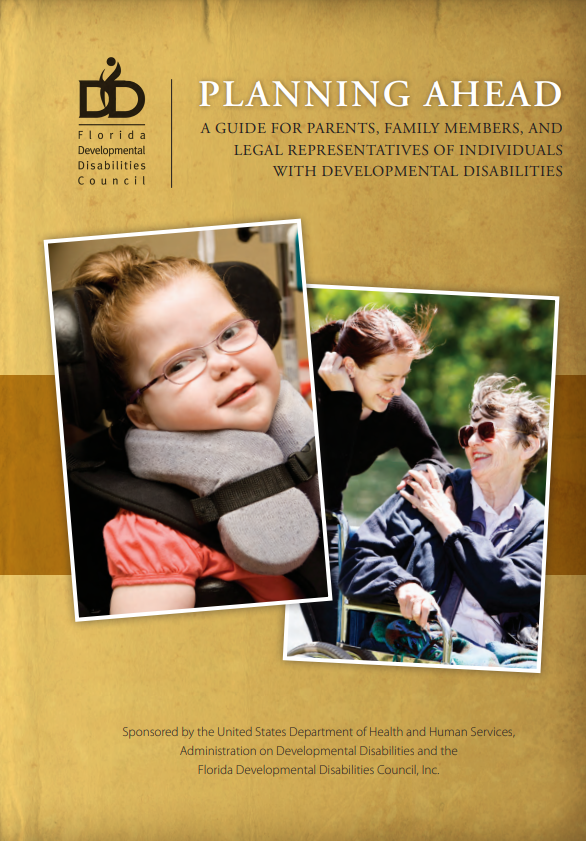
Recently revised! A handbook for parents, family members and guardians of adults with developmental disabilities. Provides information that will help identify and plan the direction and future regarding the quality of life family members' desire. Personal information summary included to ensure the safety and happiness of a surviving family member with a disability. (2005)
A policy analysis resource guide of public services available to Florida residents with developmental disabilities (2003)
This guide is designed for people who receive services through the DCF/ Developmental Disabilities Program, this workbook explains the support planning process, including how to select and work productively with a support coordinator. (1998)
A publication for individuals who receive Developmental Disabilities Home and Community-Based Waiver Services (DD/HCBS) or Family Supported Living Services (FSL) waivers. This guidebook is designed to help people understand the waivers and to hlep people manage their services, supports and service providers.
The Florida Developmental Disabilities Council, in collaboration with the Strategic
Path Work Group, contracted with the Human Services Research Institute to
develop A Strategic Path Forward , a plan for improving the state’s developmental disabilities service system.
A brochure that explains how to apply for membership on the Florida Developmental Disabilities Council.
Click here to review disability awareness books recommended by the FDDC.
You can print a copy by clicking here, or call the Council at 1-800-580-7801 and request a copy.