
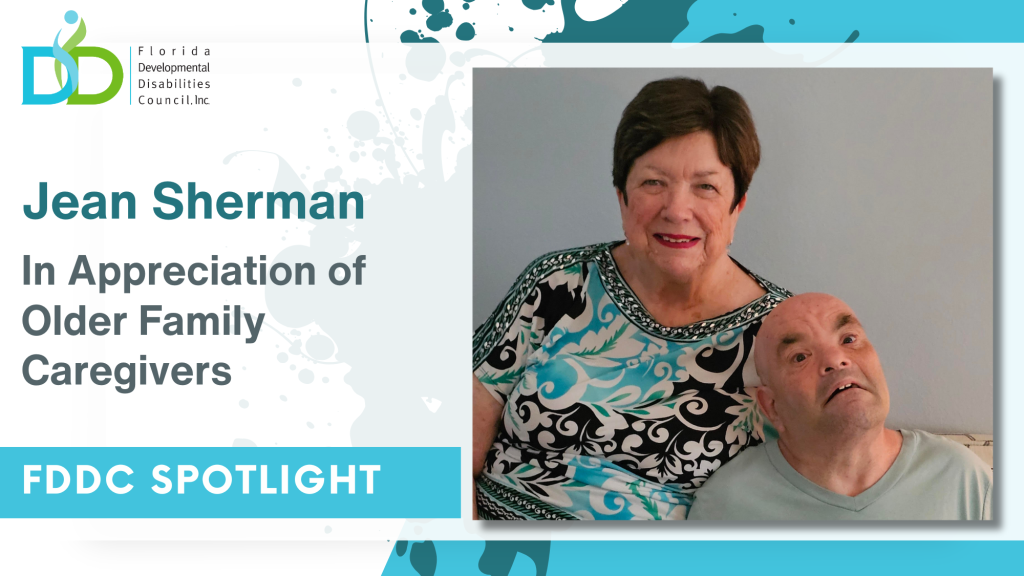
You may be reading more about family caregivers lately. They are the foundation of the health and safety of individuals with developmental disabilities (DD), as well as their final safety nets. Self-described as “just family,” these parents or siblings are by far the longest-serving of all caregivers, often for 60 or 70+ years. Policy makers have begun to recognize that this is the first generation of people with these disabilities who are living to old age. Yet little mention is given to the older family caregiver (often a parent) who is also living longer. This phenomenon of dual increased longevity has led to an entire generation of aging DD families who often share both age-related changes and chronic conditions. The caregiver role then becomes critical as the severity of disability increases or the co-occurrence of chronic diseases appears.
The current national attention on family caregivers is much-needed and long overdue, particularly in a climate of uncertainty where cuts in healthcare and home and community-based services are being debated. Family caregivers wear many hats and, as a consequence, their learning curves are constantly increasing. In addition to the physical demands of caregiving, they must remain familiar with changes in: Medicare and Medicaid laws; service eligibility requirements; changes in rules and service professionals at the state and local levels; and, changes in the age and health condition of the person, with the attendant need for new doctors, tests, medications and therapies. The primary family caregiver is also the repository of important social and health history and information that must be passed on.
There are several approaches we can use to show our appreciation for aging family caregivers. First, we must work to ensure that each unique aging family receives a coordinated system response on the local level from aging and developmental disability service providers. Formerly siloed service systems, they must assess the needs of these aging families as a unit. Second, we should consider access to accessible, multi-modal training for these aging family caregivers – both alone and in support groups – as well as the caregivers to follow. Such training could be presented via the latest technology and cover: service system navigation; future care planning; supported decision-making; appropriate use of respite services; and stress management, among other topics. Finally, state and federal legislators and policymakers must collaborate with one another to ensure that aging family caregivers are appreciated with the supports they need.
Jean Sherman is Chair of the Florida Developmental Disabilities Council’s State Plan Committee and serves as the Council’s Liaison with the Mailman Center UCEDD at the University of Miami, where she is Director of the Center on Aging and Disabilities and previously served on the faculty for more than 20 years. She holds a graduate certificate in Gerontology and spent 12 years as a service provider and administrator in Broward County’s Aging Network. A former Chair of the statewide Family Care Council, she is also the mother of six adult children and lives with her family in Pembroke Pines.